
Unfair Pay: Should the USWNT’s Lawsuit have been dismissed?

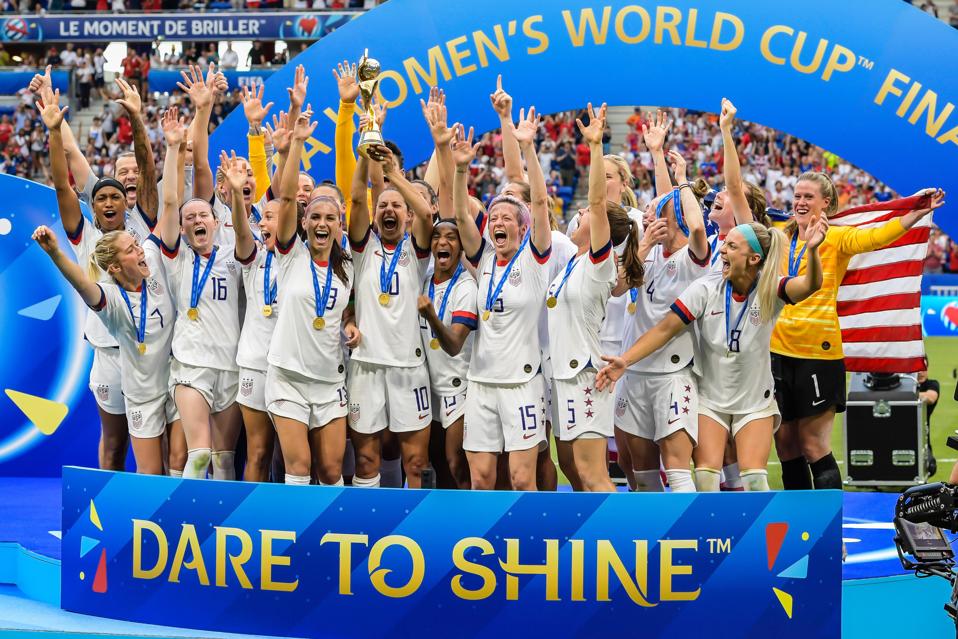
The United States women’s national team has won four World Cups, four Olympic gold medals, and numerous other titles. They have solidified themselves as the most successful women’s soccer team in the world. However, even with this success, many do not hold the same for the women’s team as the U.S. men’s national team, even those who reap revenue off the former’s achievements. The men’s team earns more money, receives better accommodations when they travel, and has more trainers and team personnel, all while being the less successful team. In 2019, the USWNT filed a lawsuit against the U.S soccer federation for $67 million for gender discrimination. Federal Judge R. Gary Klausner ultimately dismissed the lawsuit. The dismissal is an insult to the achievements of the USWNT. Both soccer teams in the U.S. should receive the same pay regardless of gender or success.
Overall, the USWNT has been much more successful than the men’s team. To compare, the women's team has won four World Cups, four Olympic gold medals, and eight CONCACAF trophies; on the other hand, the USMNT has won no World cup, two Olympic gold medals, and five CONCACAF trophies. The USWNT is also ranked #1 in the world whereas its male counterpart is ranked #22. The women’s team has garnered more success in a short time as well: the WNT was founded in 1985 while the MNT was founded in 1913.
However, even with the WNT team earning more trophies, some argue that the men face harder competition. For example, in the men's FIFA World Cup, there have typically been 32 teams compared to 24 in the women’s FIFA World Cup. Though some believe that this argument is valid, the women’s team has fewer resources and does not receive the same coaching staff and support as the men’s team. Considering the adversity the WNT endures, the women’s team has more impressive achievements.
Even if the USWNT was not as successful, they still deserve equal pay. Two teams should receive the same salary for doing the same job. Like men, women soccer players dedicate their lives to the sport, training and playing matches for hours on each day of the week.

The pay gap in soccer is also not isolated to the United States. For example, when the USWNT won the 2019 World Cup, they received just $4 million. In contrast, the French Men’s Team received $38 million for winning the 2018 World Cup. Why such a disparity? FIFA’s prize pool for the men’s world cup is much larger than the women’s, which creates an unfair situation from the beginning.
The prize pool for the men’s tournament was $400 million whereas the women’s prize pool was only $30 million. Critics argue that the prize pool for the men is larger because it attracts more viewers. However, FIFA makes $4.6 billion a year. Although FIFA reinvests much of the money into its operations, it could use more revenue to balance the two prize pools. Even though the men’s tournament does generate more revenue due to popularity, the women’s tournament could become more popular and earn money if it does not have so many limited resources in terms of marketing and publicity.
In the lawsuit, USWNT also claimed that they received $1.7 million for winning the 2019 World Cup, whereas the USMNT received $5.3 million just for making it to round 16 in 2018. Although the US soccer federation denied these claims, they would align with the pay inequality from FIFA. This gap needs to disappear. Both teams are doing the same job regardless of gender. Also, even though FIFA does not pay their players evenly, that does not justify the US federation failing to treat all their players equally. To lead by example, the US soccer federation should be one of the first federations to enact equal pay, and perhaps other federations will follow. These tournaments are unfair from the start. The prize pools are not close to even, meaning that the women’s team could never even come close to being paid the same amount as the men, whether they won or not.
The USWNT’s lawsuit should not have been dismissed. The USWNT outperforms the USMNT in every division, but they still don’t receive what they deserve. In every aspect of international soccer, there is a pay gap. From FIFA to our own country, women are not paid equally for doing the same job as men for no particular reason. Was there a hidden motivation for dismissing the lawsuit? Would confirming that there was a pay gap bring fire on the US soccer federation for gender discrimination? Or was it purely because the US soccer federation did not agree?


