

The NBA Needs to Address Rest: How the NBA can keep fans and TV networks happy

NBA coaches often rest healthy players during the last few games of the 82-game season if their team has clinched a spot in playoffs, and they want to prevent injury in meaningless games. However, in the past few years, coaches have decided to rest healthy players throughout the season, even in games against strong teams or nationally-televised games. This practice is known as load management: NBA teams rest their players for a night or multiple during the season to preserve their energy for the postseason and prevent injury. As an entertainment business, the NBA must address the problem of load management to show respect to fans and TV networks.
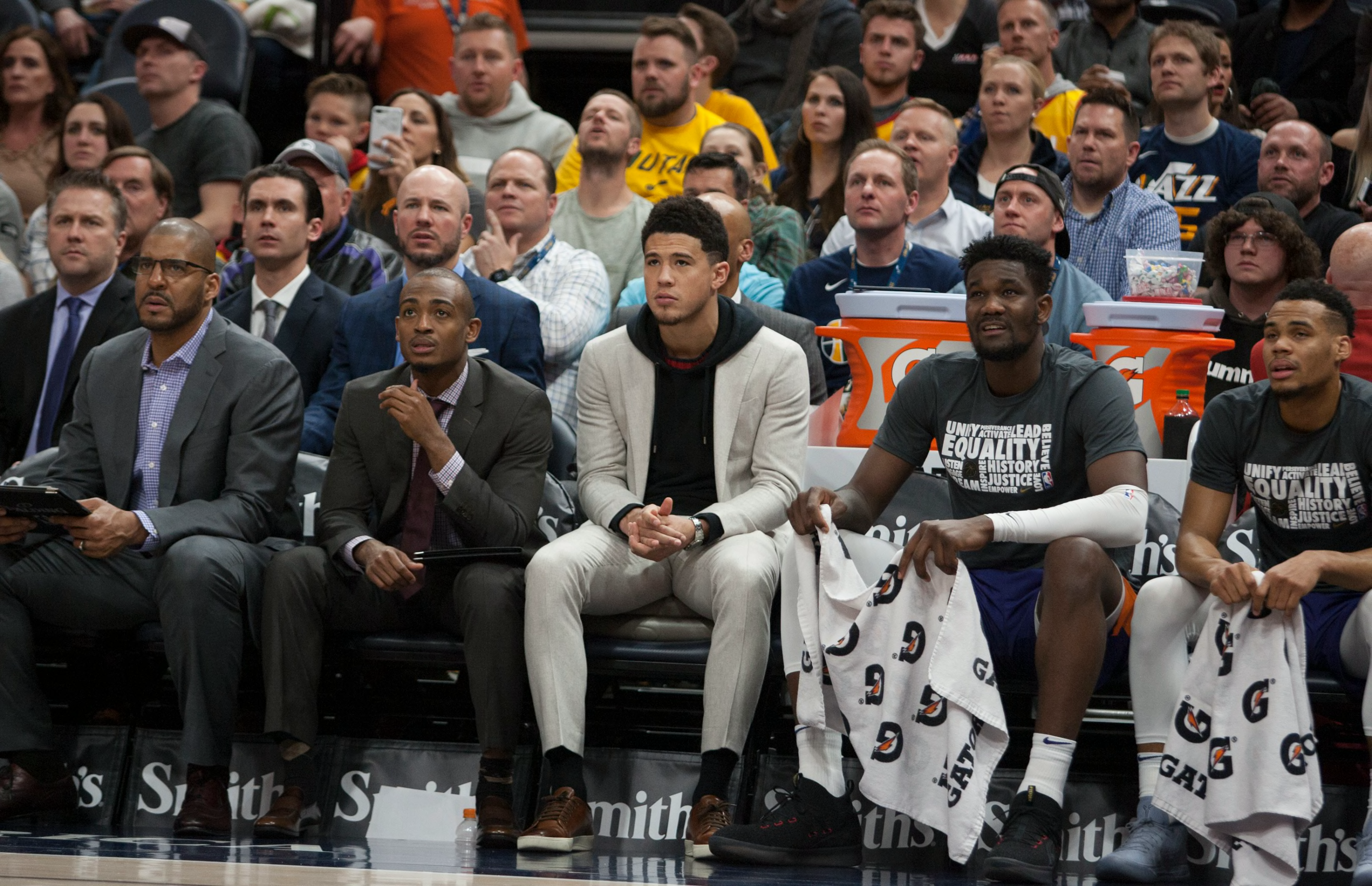
Fans do not enjoy paying lots of money to watch superstars such as LeBron James or Kawhi Leonard on the bench with street clothes and no sign of injury. Furthermore, TV networks feel embarrassed showcasing a game between two top-quality teams where the best players are sipping coffee on the bench instead of playing on the court. Media analysts and former NBA players object to load management too; for instance, former Chicago Bulls player Michael Jordan stated that “[NBA players] are paid to play 82 games.” ESPN media analyst Stephen A. Smith has described load management as an “insult to the paying customer.”
Although many may dislike load management, players, coaches and sports analysts have cited several reasons for it: force exertion, recovery regimens, sleep deprivation, cross-country flights, and the length of the season. Despite all these supposed factors for load management, sports experts and scientists cannot guarantee that NBA players truly need it; NBA players’ bodies could adapt to the rigor of the NBA season. Do players need load management? Possibly not. However, the NBA cannot force them to stop. After superstar Kawhi Leonard missed 22 games for the Toronto Raptors last season due to load management, the NBA decided to ban load management; however, teams can still find a way to load manage their players. For example, teams could use a player’s injury history or cite joint and muscle soreness, conditions that every NBA player experiences after a game, as an excuse. Although the NBA can penalize a team for resting players during nationally-televised games—such as when they fined the San Antonio Spurs in 2012 because coach Greg Popovich rested his starters against the Miami Heat, the most dominant team at the time—NBA teams are still resting their stars in high-profile games. The NBA cannot stop load management, but it can prevent load management at its most harmful moments to the fans and TV networks.
The NBA should not schedule nationally-televised games when a team has a back-to-back (two games in two days). Load management typically occurs during back-back games; during the 2018-19 NBA season, two-thirds of the games missed for load management and rest were a part of back-to-back games. If the NBA eliminates nationally-televised games on a back-to-back, teams would be less motivated to rest players on these games. Not resting stars during these games will also delight watchers when they watch an NBA game on one of America’s largest news networks because they can watch the superstars that they expected to see.
NBA teams must respect the paying customer and ensure that they are spending the appropriate value for the product that they expected to watch. In the NBA, ticket prices for a game are more expensive if a superstar player such as LeBron James or Giannis Antekounmpo is playing that game. Similar to how spectators can get a refund if the lead of a Broadway play cannot perform, the NBA should repay fans if teams rest a superstar. Before fans buy a ticket, the ticket vendors should indicate the cost of a ticket or the refund that the customer will receive if a superstar rests. In addition, teams should publicize when they are going to rest a player. For example, if a team plans to rest a player during one game for every back-to-back, the teams should announce this plan before the fans purchase the tickets.
The league has basketball players that play through a rigorous season each year, but it is first an entertainment business. The NBA could not survive if its fans did not pay to watch the games or support their teams. If TV networks did not televise the games, the NBA could not showcase the best basketball players to the entire world and therefore could not make a profit. The NBA cannot stop load management but at least can try to manage it.


