
/cdn.vox-cdn.com/uploads/chorus_image/image/68736388/1299031610.0.jpg)
Achilles Injuries Can't Even Stop KD: Durant’s success is not a sign that NBA players can recover from achilles ruptures

At 34 years old, late NBA legend Kobe Bryant had a championship ring for each finger on his right hand. Despite his achievements, Kobe was never satisfied, and on April 12, 2013, he again proved why he was one of the hardest-working athletes ever. While driving to the basket during a playoff-clinching game against the Golden State Warriors, Kobe was fouled and fell to the floor, rupturing his Achilles. Kobe hobbled to the free-throw line and hit two game-tying free throws, setting the Los Angeles Lakers for a playoff spot.
After his Achilles injury, Kobe was never the same. Despite his unwavering passion for the game and strong mindset, he averaged just 19 PPG on 37% shooting across his three final seasons. An Achilles tear practically ruins the career of an NBA player. This year, two-time NBA champion Kevin Durant is playing his first season after suffering an Achilles rupture. While Durant appears to be reaching his pre-injury form, he is an anomaly among other players who have suffered an Achilles tear due to his unique style of play and ability to adapt.
The Achilles is the thickest and strongest tendon in the body and connects the calf to the heel. It absorbs the force when an athlete lands on their feet and provides power for pushing off in running and jumping. Doctors often compare the tendon to a rubber band that holds the lower half of the leg together. When the rubber band tears, it cannot perform its normal functions. Depending on the severity of the injury, players can take anywhere from four to twelve months to recover. In all cases, the person cannot walk for several weeks, much less put excess weight on the foot.
Achilles ruptures are especially devastating to NBA players, who rely on the tendon to quickly change directions and jump high to gain an advantage on their defender. When an NBA player ruptures his Achilles, fans immediately speculate how the injury will affect his career. In 2015, a CBS study examined the impact of an Achilles rupture on 14 players who returned to the NBA after suffering the injury. The study analyzed players including Kobe Bryant, Dominique Wilkins, Chauncey Billups, and Elton Brand and found that that players’ minutes dropped by 27 percent on average, and many of them were not able to generate stat lines similar to that of their pre-injury forms. Moreover, in 2013, the American Journal of Sports Medicine found that of the 18 players they examined, seven never returned to the NBA, and only eight returned for two or more seasons.
Those who came back to the league also saw a decrease in the number of games they played, missing 56 games on average. The stat that stood out the most, however, was the change in shooting efficiency among players who returned. Players who rupture their Achilles, on average, shoot five percent worse than their pre-injury percentages, as they begin settling for outside jump shots to compensate for a loss of mobility and agility.
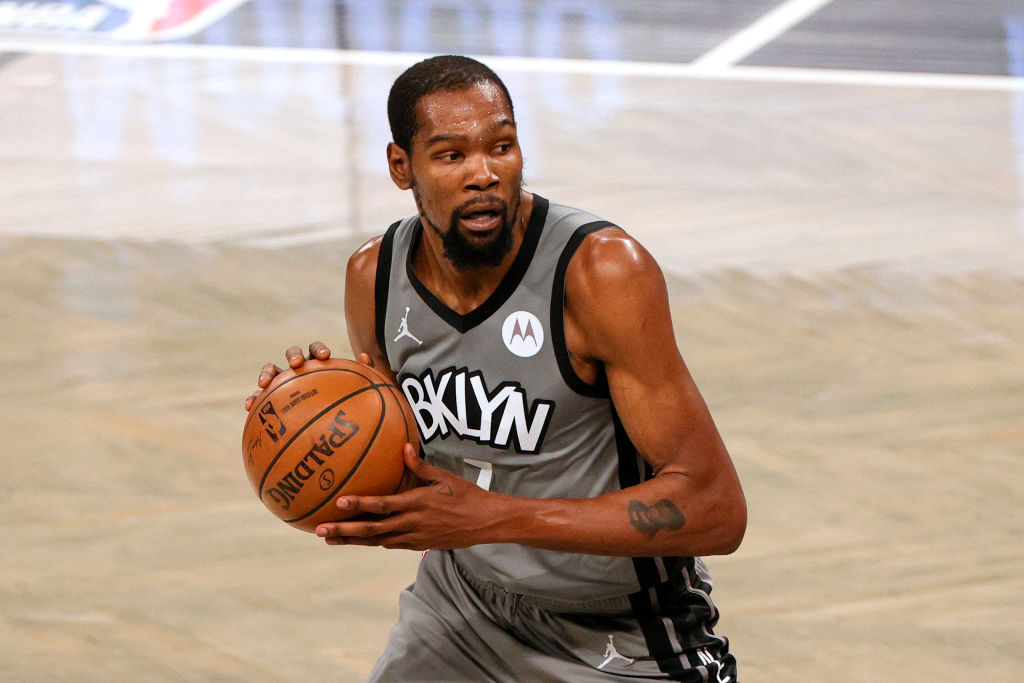
On the other hand, Kevin Durant has played exceptionally well in his first season back from his Achilles injury. So far, Durant has been averaging over 30 on 52% shooting, which are career second-bests and career bests, respectively. While still early in the season, these numbers are a great sign. It is not only safe to say that Durant has returned to form, but he is exceeding expectations in some categories.
Why has the injury not impacted Durant as much as other players? Durant’s length allows him to rely less on his athleticism, a quality negatively impacted by Achilles ruptures. At six-feet-ten-inches tall, he is an explosive scorer and an elite shooter capable of playing both guard and forward.
Durant is not as ball-dominant as other superstars. Playing alongside superstars like Stephen Curry, Russell Westbrook, Kyrie Irving, and James Harden, Durant has demonstrated his ability to play off-the-ball in catch-and-shoot situations. As a result of playing off-ball, he has increased his field-goal percentage this year. Since he cannot place as much pressure on his Achilles, Durant relies on his teammates to set him up for efficient shot attempts.
According to the studies mentioned previously, this increased shooting should result in a decrease in inefficiency. However, due to Durant’s release speed, it is almost impossible to guard his outside shots, and thus he continues to hit three-pointers at a high rate. Furthermore, Durant’s main advantage before the injury was his length, which allowed him to drive to the basket with ease. Although Durant has appeared to lose some mobility due to his injury, his seven-and-a-half foot wingspan remains, and with his incredible quickness, he still can effectively drive and finish on defenders.
Due to his playstyle and physical ability, the Achilles rupture should not impede Kevin Durant’s performance. While it is certainly promising that Durant seems to have returned to pre-injury form, his success thus far in the 2020-2021 campaign is not a sign that NBA players can always return from an Achilles tear. We must remember that each player who sustains an injury like Durant’s is not a unique and talented guard who is almost seven feet tall.


